
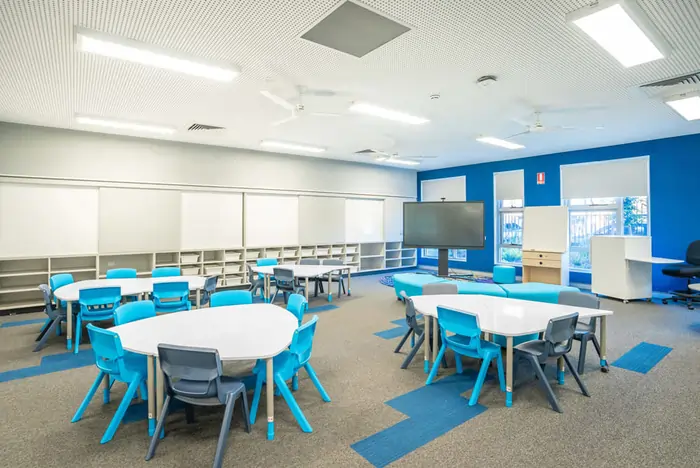
A college cleaning contract should clearly define the areas to be cleaned, the tasks required, cleaning frequencies, service hours, responsibilities, quality checks, exclusions, and the process for requesting additional work. For colleges in Sydney, a well-defined agreement also needs to account for class timetables, exams, campus events, building access and the different cleaning needs of teaching spaces, amenities and shared facilities.
When comparing services for college cleaning in Sydney, facilities managers should look beyond the quoted price. Two proposals may appear similar but cover different tasks, frequencies, consumables and quality-control arrangements. A written scope of work helps prevent misunderstandings, makes quotes easier to compare and gives both parties a clear basis for reviewing performance.
This guide explains what to include in a college cleaning contract, how to build a practical campus cleaning checklist and which questions to ask before signing an agreement.
What Is a College Cleaning Contract?
A college cleaning contract is a written agreement between an educational institution and a cleaning provider. It sets out the services to be delivered, when and where they will be performed, what each party is responsible for, and how the work will be checked and managed.
The agreement may cover routine cleaning of classrooms, lecture theatres, offices, libraries, amenities, kitchens, corridors and common areas. Depending on the campus, it may also include periodic deep cleaning, additional event cleaning or other services agreed by both parties.
A useful contract should answer five basic questions:
- What needs to be cleaned, and which tasks are included?
- When will the work take place, and how often?
- Who supplies products, equipment, and consumables?
- How will service quality and incomplete tasks be recorded?
- What happens when requirements change, or additional work is needed?
The detail should reflect the campus’s size, occupancy, operating hours, building types and specific requirements. A small college with a few teaching rooms will not necessarily need the same service arrangement as a multi-building campus with lecture theatres, specialist rooms and extensive shared facilities.
10 Essential Inclusions in a College Cleaning Contract
Before signing a contract, check that the following ten areas are documented clearly.
1. A detailed scope of work
The scope of work should identify every included building, room, floor and shared space. Avoid vague descriptions such as “general campus cleaning” unless they are supported by a detailed task schedule.
Specify what each task involves. For example, cleaning a classroom might include emptying bins, cleaning accessible surfaces, spot-cleaning marks, and vacuuming or mopping floors as appropriate. It should be clear whether whiteboards, internal glass, furniture and equipment are included or excluded.
Attach a room schedule or site plan where useful, especially when the campus contains multiple buildings or areas with different access requirements.
2. Cleaning frequencies and schedules
The contract should state how often each task is expected to occur. Daily, weekly and periodic schedules can help make responsibilities measurable, but frequencies should be agreed based on occupancy, use, risk, available resources and the condition of each area.
For example, heavily used amenities may need more frequent attention than a low-traffic office. Periodic tasks, such as detailed cleaning of selected surfaces or other agreed deep-cleaning work, should have their own schedule.
Make sure the contract distinguishes between the frequency of a task and the time allocated to complete it. A schedule is useful only if the agreed scope can reasonably be delivered within the available service hours.
3. Service hours and campus access
Educational facilities often operate beyond standard office hours. Teaching sessions, examinations, evening classes, events and weekend activities can all affect cleaning access.
The agreement should specify:
- Approved service days and hours.
- Areas that must remain accessible during cleaning.
- Key, swipe-card or other access arrangements.
- Procedures for securing buildings after service.
- Restrictions around exams, events or specialist spaces.
- How access changes and cancelled visits will be communicated.
For sites where security is important, agree how access credentials are issued, stored, returned and revoked. The contract should also identify who the provider contacts if a room is locked, an alarm is activated, or a scheduled area cannot be accessed.
4. Cleaning products, equipment and consumables
Clarify which party supplies cleaning products, machinery, cloths, mops, rubbish bags and other equipment. If the college expects the provider to replenish soap, paper towels, toilet paper or other washroom consumables, identify those items separately.
The agreement should also explain how product substitutions are approved and how relevant product information is made available. Where hazardous chemicals are used, applicable workplace safety requirements also need to be addressed. SafeWork NSW provides guidance on chemical labelling, registers and safety data sheets.
However, do not assume that “cleaning supplies included” covers every consumable. List inclusions and exclusions so that both parties understand what the quoted price covers.
5. Hygiene, safety and site-specific requirements
The contract should document relevant site rules and the safe delivery of cleaning work. This may include managing wet floors, using warning signs, storing chemicals appropriately, following product instructions and keeping equipment out of circulation areas.
Identify any special requirements for particular spaces, such as computer rooms, food preparation areas, laboratories or rooms containing sensitive equipment. These areas may need separate instructions or may be excluded from routine cleaning unless specifically agreed.
If disinfection is required for particular surfaces or situations, define the expected tasks and products rather than relying on a general promise that the campus will be “fully sanitised”. Product selection and use should suit the surface, the intended purpose and applicable instructions.
6. Staff responsibilities and supervision
The contract should identify the provider’s service contact and the college’s nominated representative. It should explain who allocates tasks, handles site questions, supervises work and escalates issues.
Where relevant to the site and the services being performed, document induction requirements, training expectations, staff identification and any screening or access conditions imposed by the college. Do not assume that one screening requirement applies to every educational site; confirm the institution’s actual requirements before including them.
Also clarify how staff absences, substitutions and changes to the regular cleaning team will be managed.
7. Inspections and quality assurance
A contract needs a practical way to check whether the agreed work has been completed. This could include scheduled inspections, completed task records, periodic reviews and a process for reporting missed tasks.
Agree on:
- Which areas will be inspected.
- Who conducts the inspections.
- How often inspections take place.
- How defects or missed tasks are recorded.
- Who is responsible for corrective action.
- How recurring problems are reviewed.
Use clear, observable measures. “Floor vacuumed and free of visible loose debris” is more useful than “floor cleaned to a high standard” when documenting a specific task.
8. Pricing, invoicing and payment terms
The agreement should explain how the service is priced and billed. Depending on the arrangement, charges might be based on a fixed contract amount, scheduled visits, agreed service hours or a combination of routine and additional work.
Check the billing frequency, payment terms, applicable taxes, and any review mechanism for price changes. If extra cleaning is charged separately, the contract should explain how that work is quoted, approved, and invoiced.
The lowest initial quote may not represent the best value if it excludes tasks the college expects to receive or leaves significant services to be charged separately.
9. Exclusions and additional services
Every contract should identify what is not included. Possible exclusions might include specialist cleaning, external windows, high-level work, carpet extraction, event clean-ups, construction-related cleaning, or other tasks not listed in the agreed scope.
These are examples to check, not a universal list of exclusions. Confirm each provider’s actual proposal.
For additional services, agree on a written approval process. It should explain who can request the work, how the cost will be confirmed, whether the timing is subject to availability, and how completion will be recorded.
10. Reviews, complaints and contract changes
Campus requirements can change during the year. A new building, altered timetable, refurbishment or increase in student numbers may affect the cleaning plan.
The agreement should describe how service changes are requested, approved and documented. It should also set out how complaints are logged, how corrective work is arranged and when unresolved or recurring problems are escalated.
College Cleaning Checklist: Which Areas Should the Contract Cover?
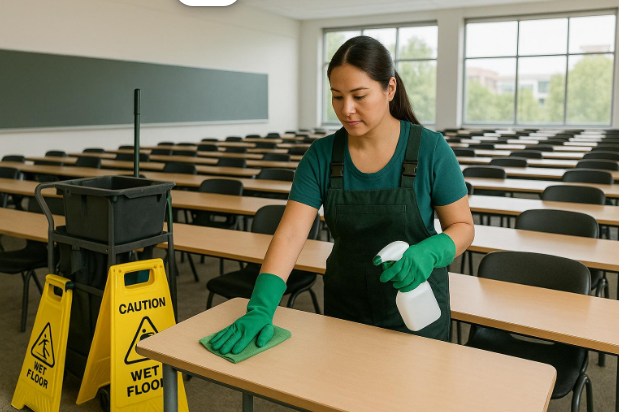
Use the table below as a starting point when preparing a scope of work for college cleaning in Sydney. Adapt it to the actual buildings and activities on campus.
| Area | Typical tasks to consider | Frequency to assess |
| Classrooms | Empty bins, clean accessible surfaces, spot-clean marks, vacuum or mop floors | Based on class use and daily occupancy |
| Lecture theatres | Remove waste, clean accessible desks and surfaces, attend to floors | Based on timetable and audience size |
| Libraries and study spaces | Remove waste, clean accessible surfaces, attend to floors and shared areas | Based on use and opening hours |
| Computer rooms | Remove waste and clean suitable surfaces without damaging equipment | Based on room use and equipment requirements |
| Staff offices | Empty bins, clean agreed surfaces and floors | Based on occupancy and service scope |
| Corridors and stairwells | Remove waste, clean floors and attend to visible marks | Based on foot traffic and site risks |
| Entrances and reception areas | Attend to floors, accessible surfaces, glass where included, and waste | Based on traffic, weather and presentation needs |
| Toilets and washrooms | Clean agreed fixtures and surfaces, attend to floors, check consumables if included | Based on usage and hygiene requirements |
| Kitchens and staff break rooms | Clean agreed benches, sinks, tables and floors; remove waste | Based on use and food-related activities |
| Common rooms and student areas | Remove waste, clean agreed surfaces and floors | Based on occupancy and events |
| Meeting and event rooms | Reset agreed areas, remove waste and clean surfaces | Based on bookings and post-event requirements |
Important: This table is a planning aid, not a prescribed Australian cleaning standard. There is no single frequency that suits every room in every college. The final schedule should be based on actual use, site conditions, agreed service levels and applicable requirements.
For a multi-building campus, consider creating a separate checklist for each building or zone. This makes it easier to assign responsibility, record completed work, and investigate recurring issues.
How to Set Cleaning Frequencies Around the College Calendar
A college cleaning plan should reflect how the campus is used throughout the year, not just its standard weekly timetable.
During teaching weeks
Start with the normal pattern of classroom use, lecture schedules, staff occupancy and student movement. Identify busy areas and rooms with long operating hours. Build the routine schedule around those demands, then review whether the agreed service is keeping pace with actual use.
During examination periods
Examination timetables may change room access, furniture layouts and operating hours. Confirm which rooms need cleaning before or after examinations and identify any quiet periods when work can be carried out without disrupting students or staff.
During open days and campus events
Events may create additional waste, heavier use of amenities, and a need to prepare or reset particular spaces. Decide whether event-related cleaning is included in the routine contract or requires separate approval.
During semester breaks and holidays
Quieter periods can provide an opportunity for planned deep cleaning or periodic tasks that are difficult to complete during teaching weeks. Identify the work in advance, confirm building access and agree on any additional charges before scheduling it.
When the timetable changes
Agree on a process for notifying the cleaning service provider about room closures, timetable changes, new bookings and temporary access restrictions. A named contact and agreed notice procedure can help avoid missed visits or unnecessary cleaning of unused areas.
How to Compare College Cleaning Quotes in Sydney
When comparing college cleaning services in Sydney, make sure each provider has priced the same requirements. Otherwise, the comparison may be misleading.
Use this checklist to evaluate each proposal:
- Scope: Does the quote list the buildings, rooms, and tasks included?
- Frequency: Are daily, weekly, and periodic tasks clearly identified?
- Hours: Does the proposed schedule fit campus access and teaching hours?
- Products and equipment: Are supplies, machinery, and consumables included or separately charged?
- Staffing and supervision: Is the provider’s management and communication arrangement clear?
- Safety: Does the proposal explain how site rules, chemical handling and relevant work health and safety requirements will be addressed?
- Quality checks: Are inspections, task records and corrective actions described?
- Exclusions: Are specialist work, deep cleaning and event-related services clearly defined?
- Additional charges: Is there a process for pricing and approving variations?
- Contract terms: Are payment terms, review dates, renewal and termination provisions stated?
A useful comparison method is to prepare one scope of work and ask each shortlisted provider to quote against it. Record any proposed exceptions separately so that differences are visible before a decision is made.
Do not compare price alone. Consider how well the proposal matches the campus’s operational requirements, how clearly it defines responsibilities, and how performance will be reviewed. A detailed, comparable quote is more useful than a low figure that leaves essential requirements unclear.
How to Measure Cleaning Quality and Contractor Performance

A cleaning contract should explain how the college and provider will determine whether the agreed service is being delivered. The measures should be practical, consistent, and relevant to the site.
Consider tracking the following:
| Measure | What to record | Why it helps |
| Task completion | Whether scheduled tasks were completed or recorded as inaccessible | Highlights missed or blocked work |
| Inspection results | Findings from agreed room or area inspections | Provides a consistent basis for reviewing quality |
| Complaints | Date, location, issue and person responsible for follow-up | Helps identify repeated problems |
| Corrective actions | Agreed action, responsible contact, and completion status | Makes follow-up easier to verify |
| Periodic work | Whether scheduled deep-cleaning or other periodic tasks were completed | Helps prevent less frequent tasks from being overlooked |
| Service changes | Approved variations and changes to the cleaning schedule | Keeps the record aligned with campus needs |
The contract should establish the reporting method, review frequency, and process for dealing with recurring issues. It can also specify agreed response or resolution targets where appropriate.
Avoid setting arbitrary performance targets without considering the service scope and site conditions. Instead, agree on measurable expectations that the college and provider can realistically monitor and review together.
Questions to Ask Before Signing a College Cleaning Contract
Use these questions during a tender review, site meeting, or final contract discussion.
- Which campus buildings, rooms and shared areas are included?
- What exact tasks will be completed in each area?
- How frequently will each task be carried out?
- What are the standard service hours, and how are timetable changes handled?
- Who supplies cleaning products, equipment and washroom consumables?
- What access, induction, security or staff-screening requirements apply to our site?
- How are completed tasks and inspection results recorded?
- Who handles complaints, missed tasks and corrective action?
- Which deep-cleaning, event or specialist services are excluded?
- How are additional services quoted, approved and invoiced?
- How often will the professionals review performance and adjust the schedule?
- What are the contract’s variation, renewal and termination provisions?
Ask providers to answer these questions against the proposed scope rather than relying only on verbal assurances. Keep agreed changes in writing so that the final contract reflects what both parties expect.
Choosing a College Cleaning Provider in Sydney
The right provider should be able to discuss your campus requirements clearly, explain the proposed scope of work and identify how the service will be scheduled and reviewed. A useful conversation should cover your buildings, occupancy patterns, access arrangements, priority areas and any extra services you may need during exams, events or semester breaks.
So, if you are assessing a provider for your campus, make sure you confirm the specific tasks, frequencies, access arrangements and quality checks that can be included in your proposed agreement.
Before committing, request a written scope and check that the proposal distinguishes routine cleaning from periodic or additional work. Also, ensure the final agreement is tailored to the campus rather than relying on a generic commercial cleaning schedule.
Frequently Asked Questions About College Cleaning Contracts
A college cleaning contract should define the areas covered, cleaning tasks, frequencies, service hours, access arrangements, responsibilities, products and consumables, quality checks, pricing, exclusions and contract-change procedures. It should also explain how missed tasks and complaints will be recorded and resolved.
Cleaning frequency depends on room usage, student and staff numbers, operating hours, site conditions, and the agreed service requirements. High-use areas may need more frequent attention than rooms used occasionally. Set a frequency for each area and review it when campus usage changes.
Routine cleaning covers recurring tasks such as removing waste, cleaning agreed surfaces, and maintaining floors. Deep cleaning refers to additional, more detailed work that may be scheduled periodically or during quieter campus periods. The exact tasks included in each category should be written into the contract.
Compare quotes against the same written scope of work. Check the areas covered, task frequencies, service hours, consumables, equipment, exclusions, additional charges, quality checks, and contract terms. A lower price may not be comparable if the proposal includes fewer tasks or less frequent service.
Not necessarily. Some agreements include cleaning products and equipment, while others treat items such as toilet paper, hand towels, and soap as separate supplies. Ask the provider to list each included and excluded item, along with the process for replenishment and additional charges.
Use agreed inspections, task-completion records, complaint logs, and corrective-action records. Assign responsibility for reviewing results and set a regular meeting or review schedule. Tracking recurring issues can help the college and provider identify where the scope, schedule or service delivery needs attention.
Coordinate the cleaning plan with the academic calendar and campus access arrangements. Confirm any changes to room availability, exam timetables, events and holiday access in advance. Use quieter periods for agreed periodic tasks, and document whether additional work is covered by the contract or requires a separate quote.
Start by shortlisting providers that identify educational facilities among the settings they service. Ask for a site-specific proposal with a clear scope of work, frequencies, exclusions, and quality-review process. You can review Sweepshine’s school and childcare cleaning services as a starting point and confirm the services and arrangements available for your particular campus.